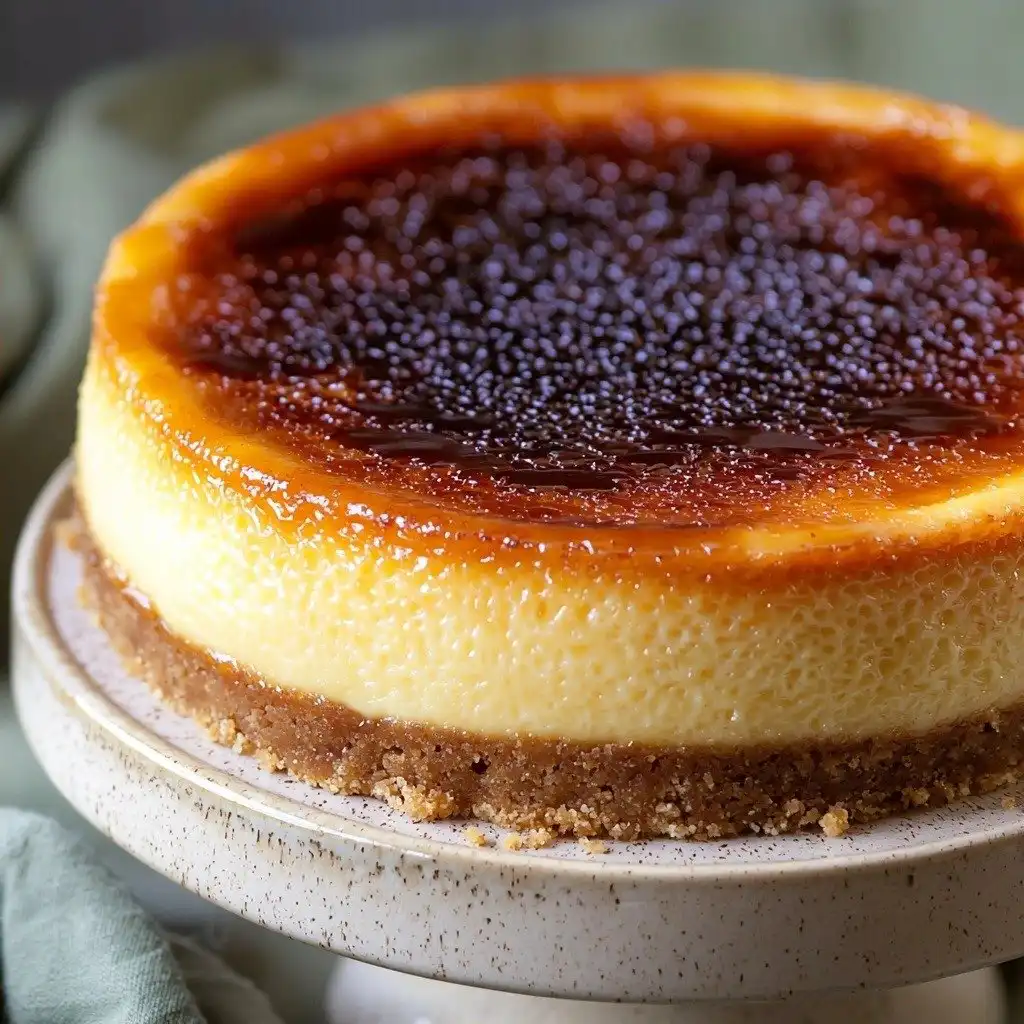
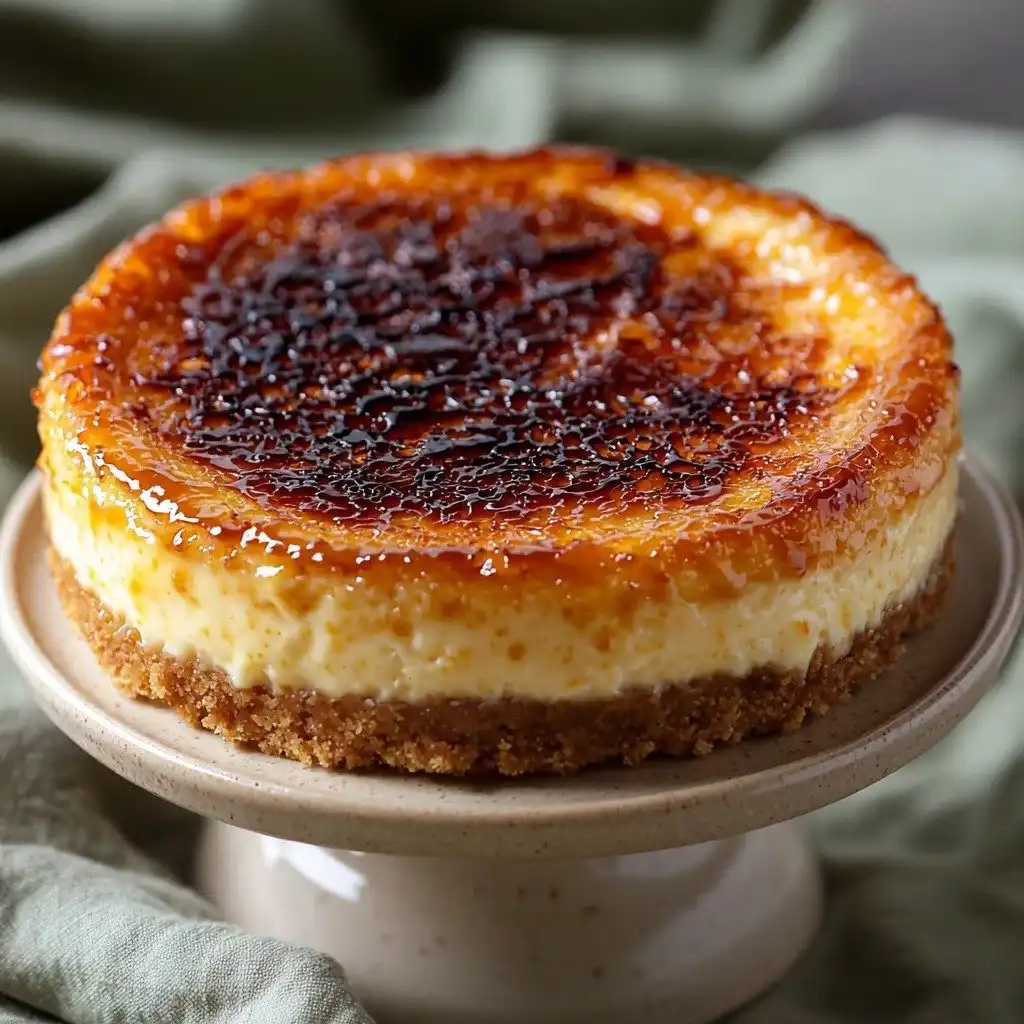
Oh, friend, let me tell you about a dessert that stole my heart the very first time I tasted it! There’s something so utterly magical about the crack of caramelized sugar giving way to a creamy, dreamy filling. That’s exactly the joy this Crème Brûlée Cheesecake brings to my kitchen. It feels fancy, like something you’d get at a five-star restaurant, but deep down, it’s just a wonderfully comforting cheesecake with a show-stopping surprise on top. It’s my go-to when I want to impress without the stress!
Why You’ll Love This Crème Brûlée Cheesecake
- It’s creamy, dreamy, and oh-so-smooth with that signature tangy cheesecake flavor.
- That caramelized sugar topping? It’s pure magic, offering the perfect crunch in every bite.
- It looks incredibly impressive, making it perfect for special occasions or just a fancy weeknight treat.
- The steps are straightforward, making it totally doable for bakers of all skill levels.
Ingredients You’ll Need
- Digestive Biscuits: These create the perfect crumbly, buttery base. You can use graham crackers if digestives aren’t available, but the flavor will be a little different.
- Butter: Melted butter binds the crust together. Unsalted is always my preference in baking so I can control the salt content.
- Cream Cheese: Softened to room temperature is key here! It helps prevent lumps and gives you that silky smooth texture. Use full-fat for the best results.
- Superfine Sugar (Caster Sugar): This fine-grained sugar dissolves beautifully into the cream cheese, ensuring a smooth filling. Granulated sugar can work in a pinch, but superfine is best for texture.
- Sour Cream: This adds a lovely tang and helps achieve that incredibly creamy consistency. Don’t skip it!
- Vanilla Extract: Use good quality vanilla! It makes a huge difference in the overall flavor.
- Salt: Just a pinch enhances all the other flavors.
- Large Eggs: Make sure they are at room temperature and lightly beaten before adding. This helps them incorporate smoothly without overmixing.
- Granulated Sugar (for topping): This is what we’ll caramelize to create that iconic brûlée crust.
How to Make Crème Brûlée Cheesecake Step by Step
First things first, get your oven preheating to 160°C (325°F). This is a gentle heat, perfect for cheesecake. While it’s warming up, let’s tackle that delicious crust. You’ll want to crush your digestive biscuits into fine crumbs. A food processor makes this super quick, but if you don’t have one, just pop them in a Ziploc bag and bash away with a rolling pin – it’s a great stress reliever! Then, stir in your melted butter until everything is evenly coated. Press this mixture firmly into the bottom and up the sides of your 9-inch springform pan. Really get in there and compact it – this ensures a sturdy crust. Set that aside.
Now for the star of the show, the cheesecake filling! Make sure your cream cheese is lovely and soft; it makes all the difference. Give it a light whisk until it’s creamy and smooth. Remember, we don’t want to overbeat it, just get it nice and smooth. Then, add your superfine sugar and mix until it’s just combined. Next, stir in the sour cream, vanilla extract, and that little pinch of salt. Make sure to scrape down the sides of your bowl often to get everything incorporated evenly.
This is where the magic happens! With your mixer on low speed, slowly, slowly drizzle in your lightly beaten eggs. Only mix until they are just combined. Overmixing the eggs can introduce too much air, which can lead to cracks. Pour this gorgeous, smooth mixture into your prepared crust. Place your springform pan on a baking sheet lined with tin foil – this is just a little insurance policy against any drips. Bake for 50-60 minutes. Don’t worry if the center still looks a little jiggly when you take it out; the edges should be slightly puffed and lightly golden. That jiggle means it’s perfectly baked! Let it cool on the oven for 10 minutes, then gently run a knife around the edge of the pan to prevent sticking as it cools completely. Pop it in the fridge to chill for at least 4 hours, or even better, overnight.
My Top Tips for Success
- I always make sure my cream cheese and eggs are at room temperature. It really helps everything combine smoothly without lumps or overmixing.
- In my experience, a water bath isn’t strictly necessary for this recipe, but placing the springform pan on a foil-lined baking sheet is a good idea for easy cleanup.
- Trust me on this one: don’t overmix the cheesecake batter, especially after adding the eggs. Overmixing incorporates too much air, which can cause cracks.
- Allowing the cheesecake to cool slowly and then chilling it for a good long time (overnight is best!) is crucial for a perfect set and texture.
- When caramelizing the sugar, move the torch constantly to prevent burning and get an even golden crust.
Common Mistakes to Avoid
- Overmixing: This introduces too much air, which can cause your cheesecake to puff up too much and then crack as it cools. Mix just until combined.
- Not softening cream cheese: Cold cream cheese will lead to a lumpy batter. Always use room temperature cream cheese.
- Overbaking: An overbaked cheesecake will be dry and crumbly. Look for a slight jiggle in the center, not a completely firm set.
- Not chilling long enough: Rushing the chilling process means your cheesecake won’t be fully set and could be difficult to slice. Patience is key!
- Burning the sugar topping: Keep the torch moving constantly over the sugar. Burnt sugar tastes bitter.
How to Store Crème Brûlée Cheesecake
- Refrigerator: Up to 3-4 days in an airtight container.
- Freezer (without topping): Up to 1 month. Wrap cooled cheesecake tightly in plastic wrap, then foil. Thaw in the refrigerator overnight. Add the brûlée topping just before serving.
Frequently Asked Questions
Can I make this Crème Brûlée Cheesecake ahead of time?
Absolutely! The cheesecake needs to chill for at least 4 hours, or ideally overnight, so it’s perfect for making a day in advance. Add the caramelized sugar topping just before serving for the best texture.
Why did my cheesecake crack?
Cracks often happen from overmixing the batter, overbaking, or a sudden change in temperature during cooling. Make sure to mix gently and let it cool slowly.
What if I don’t have a kitchen torch?
While a kitchen torch is ideal for the perfect brûlée, you can try placing the sugar-topped cheesecake under a broiler. Watch it very carefully, as sugar can burn quickly, and keep it a good distance from the heat source.
Can I use a different type of biscuit for the crust?
Yes, you can! Graham crackers, shortbread, or even vanilla wafers would make delicious alternatives for the crust.
How do I know when the cheesecake is done baking?
The edges should appear set and slightly puffed, and the center will still have a slight jiggle when you gently shake the pan. It will firm up completely as it cools and chills.
I really hope you give this Crème Brûlée Cheesecake a try! It’s such a showstopper, and truly, the taste is out of this world. There’s nothing quite like that satisfying crack of the sugar. If you make it, please let me know how it turns out in the comments below – I love hearing from you!
PrintCrème Brûlée Cheesecake
A luxuriously creamy cheesecake with a crisp, caramelized sugar topping, combining two classic desserts into one show-stopping treat.
- Prep Time: 30
- Cook Time: 60
- Total Time: 330
- Yield: 12 servings
- Category: Dessert
- Method: Baking
- Cuisine: American
- Diet: Vegetarian
Ingredients
- 170 g digestive biscuits
- 100 g butter melted
- 900 g cream cheese softened to room temperature
- 200 g superfine sugar (caster sugar)
- 160 g sour cream
- 1 ½ tsp vanilla extract
- Pinch of salt
- 4 large eggs room temperature lightly beaten
- 50 g granulated sugar
Instructions
- Preheat your oven to 160°C (325°F).
- Blend the digestive biscuits in a food processor until fine crumbs form, or crush them in a Ziploc bag with a rolling pin.
- Tip the biscuit crumbs into a bowl.
- Add the melted butter to the biscuit crumbs and stir until well combined.
- Pour the biscuit mixture into a 9-inch springform pan.
- Press the mixture firmly into the bottom and slightly up the sides of the pan to form the crust.
- Set the crust aside.
- In a stand mixer or large bowl with an electric whisk, lightly whisk the softened cream cheese until it is creamy and smooth.
- Do not overbeat the cream cheese.
- Add the superfine sugar to the cream cheese and mix until just combined.
- Add the sour cream, vanilla extract, and a pinch of salt to the mixture.
- Stir until all ingredients are well-combined, scraping down the sides of the bowl as needed.
- Set the mixer to a low speed.
- Slowly add the lightly beaten eggs, a little at a time, mixing just until they are combined into the batter.
- Pour the cheesecake mixture into the prepared springform pan with the crust.
- Place the springform pan on a baking sheet lined with tin foil.
- Bake in the preheated oven for 50-60 minutes, or longer if needed.
- The edges of the cheesecake should slightly puff up and turn a very light golden brown.
- The center of the cheesecake should still be jiggly when gently shaken.
- Remove the cheesecake from the oven.
- Allow it to cool on top of the oven for 10 minutes.
- Use a knife to gently loosen the crust from the inside edge of the springform pan to prevent cracking as it cools further.
- Keep the cheesecake in the pan as it cools completely to room temperature.
- Once completely cooled, transfer the cheesecake to the fridge to chill.
- Chill the cheesecake overnight or for at least 4 hours.
- Carefully remove the ring from around the springform pan.
- Sprinkle the 50g granulated sugar in an even layer over the top of the chilled cheesecake.
- Use a kitchen torch to caramelize the sugar until it forms a golden, crisp topping.
- Allow the caramelized sugar to harden on top for a few minutes.
- Slice and serve your Crème Brûlée Cheesecake.
Notes
Ensure all dairy ingredients are at room temperature for a smooth batter.
Do not overmix the cheesecake batter, especially after adding eggs, to prevent cracks.
Chill the cheesecake for at least 4 hours, preferably overnight, for the best set and flavor.
Move the kitchen torch constantly when caramelizing sugar to prevent burning.
Run a knife around the edge of the cheesecake after 10 minutes of cooling to prevent sticking.